Guide
Magnetic Starlink Mini mount on an aluminum roof rack: why magnets don't stick, and every fix that works
You bought a magnetic mount for your Starlink Mini, walked out to your rig, and the magnets slid right off the rack. Nothing is broken. Your rack is aluminum, and aluminum isn't magnetic. Here's what actually works.
The problem: racks and modern roofs aren't steel
Magnets only grab ferromagnetic metal, which in practice means steel. Almost nothing on top of a modern vehicle is steel:
- Roof racks (Prinsu, Sherpa, Front Runner, upTOP, factory crossbars) are aluminum for weight.
- F-150 and Super Duty bodies have been aluminum since 2015.
- RV, camper, and trailer roofs are fiberglass, rubber membrane, or aluminum skin too thin to trust.
- Van high-roofs are often composite, and the steel ones are curved enough that flat magnet feet only make partial contact.
Magnetic mounts like the Veritas Vans magnet feet are a great system. They just need something steel to land on.
Every fix, compared honestly
1. Adhesive steel discs (VHB)
Stick-on steel discs with 3M VHB adhesive give each magnet foot a landing spot. They work, and they're cheap. The tradeoffs: the adhesive commits you to disc placement forever, removal can pull paint or leave residue, discs on the roof mean magnets and trapped grit riding on your paint, and each foot only gets a disc-sized target, so placement has to be exact every time you set the dish down.
2. DIY sheet steel
A piece of 14 to 16 gauge galvanized sheet from the hardware store, cut to size, drilled, and clamped or bolted to the rack. This is the folk answer you'll find in forum threads, and it genuinely works if you deburr the edges, prime the bare steel, and figure out mounting to your crossbar spacing. Budget an afternoon and expect it to look homemade, because it will.
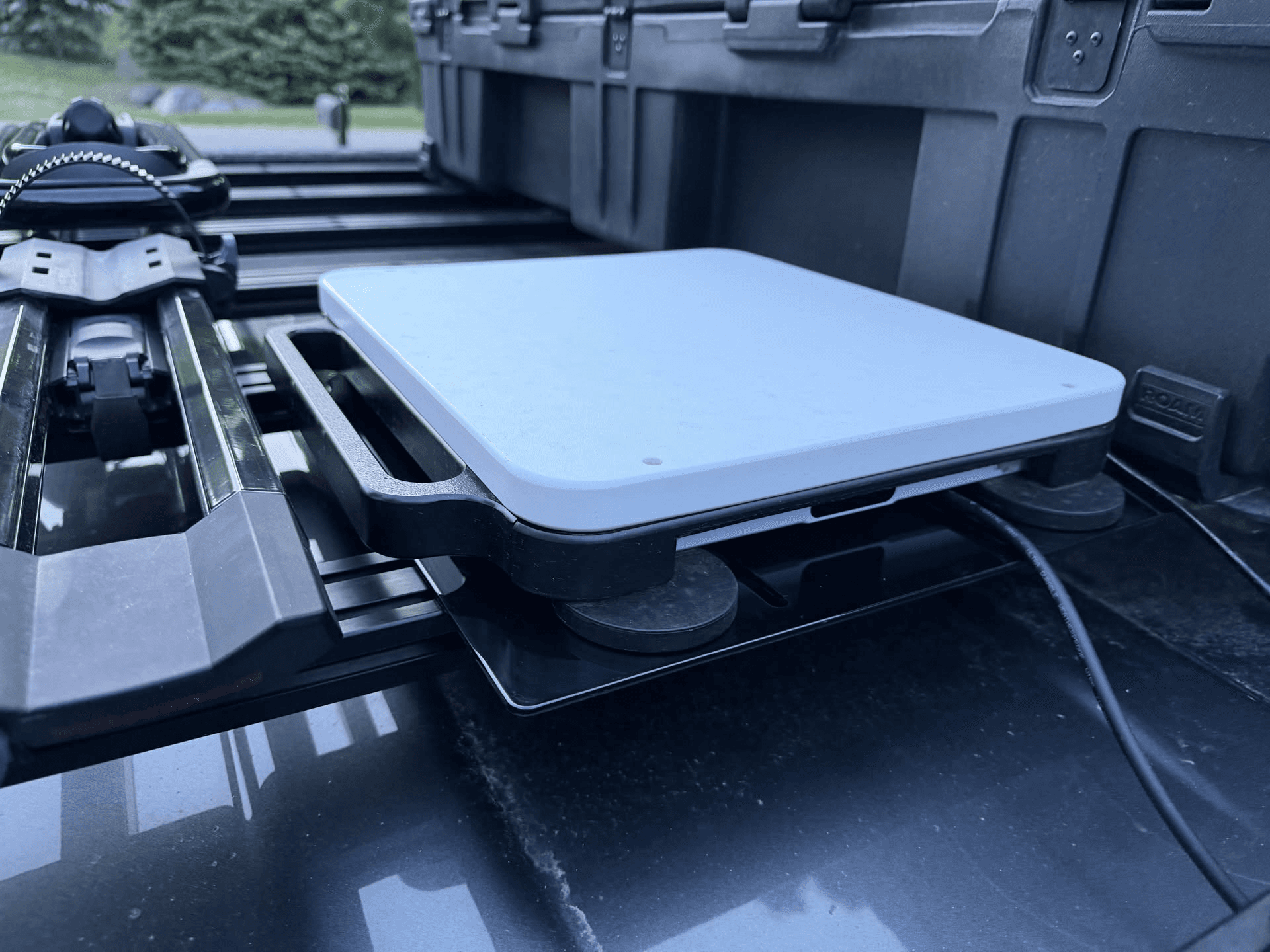
3. A purpose-built steel landing plate
Same physics as the DIY route, minus the afternoon: a powder-coated steel plate that bolts to your rack crossbars and gives magnetic feet a full-size landing surface. The dish drops on anywhere on the plate, pulls off in seconds to chase open sky at camp, and nothing ever touches your paint. Ours also has a tether point, because anything on a roof at 80 mph deserves a backup plan.
Why the magnetic workflow is worth saving
If magnets won't stick, the tempting fallback is bolting the dish down. Bolt-down mounts are secure, but you lose the thing that makes the Mini great on a vehicle: repositioning. Park under a tree and a bolted dish means getting the ladder out. A magnetic dish lifts off and moves to the hood, the tongue box, or a rock with open sky in about five seconds.
And the highway-speed worry is overblown when the landing surface is right. Wind load on the Mini at 75 mph is single-digit pounds of lift against triple-digit pounds of magnetic holding force. We've run this setup at 80+ mph with zero movement. The real risk is partial magnet contact on curved or dirty surfaces, which is exactly what a flat steel plate eliminates.
FAQ
Why won’t my magnetic Starlink mount stick to my roof rack?
Almost all roof racks (Prinsu, Sherpa, Front Runner, factory crossbars) are aluminum, and aluminum is not ferromagnetic. Magnets need steel to grab. The fix is giving the magnets a steel surface: adhesive steel discs, DIY sheet steel, or a bolt-on steel landing plate.
Will magnets stick to my truck or van roof?
Only if the roof is steel. F-150 bodies are aluminum, most RV and camper roofs are fiberglass or rubber membrane, and many van high-roofs are composite. If a fridge magnet won’t hold to it, a magnetic mount won’t either.
Is a magnetic Starlink Mini mount safe at highway speed?
Yes, when the magnets have full contact with flat, clean steel. Aerodynamic lift on the Mini at 75 mph is in the single digits of pounds, while quality magnetic feet hold well over 100 lbs. The failure mode is partial contact on curved or dirty surfaces, not magnet strength. A tether is cheap insurance either way.
Do adhesive steel discs damage paint?
The VHB adhesive holds aggressively and can pull paint or leave residue when removed, and grit trapped under any magnet resting on paint can cause swirl marks over time. A rack-mounted plate keeps magnets off your paint entirely.
Skip the hardware store trip
The Starlink Plate is a US-made powder-coated steel landing plate that bolts to your rack. Two thicknesses, tether point included, tested at 80+ mph.
See the plate